



Angina (angina pectoris) is chest pain or discomfort that comes and goes. It may be a sign of a heart attack. You should seek medical care if you’re experiencing angina. Your healthcare provider will treat your symptoms and the underlying cause. If your provider prescribes nitroglycerin, keep it with you at all times.
Advertisement
Cleveland Clinic is a non-profit academic medical center. Advertising on our site helps support our mission. We do not endorse non-Cleveland Clinic products or services. Policy
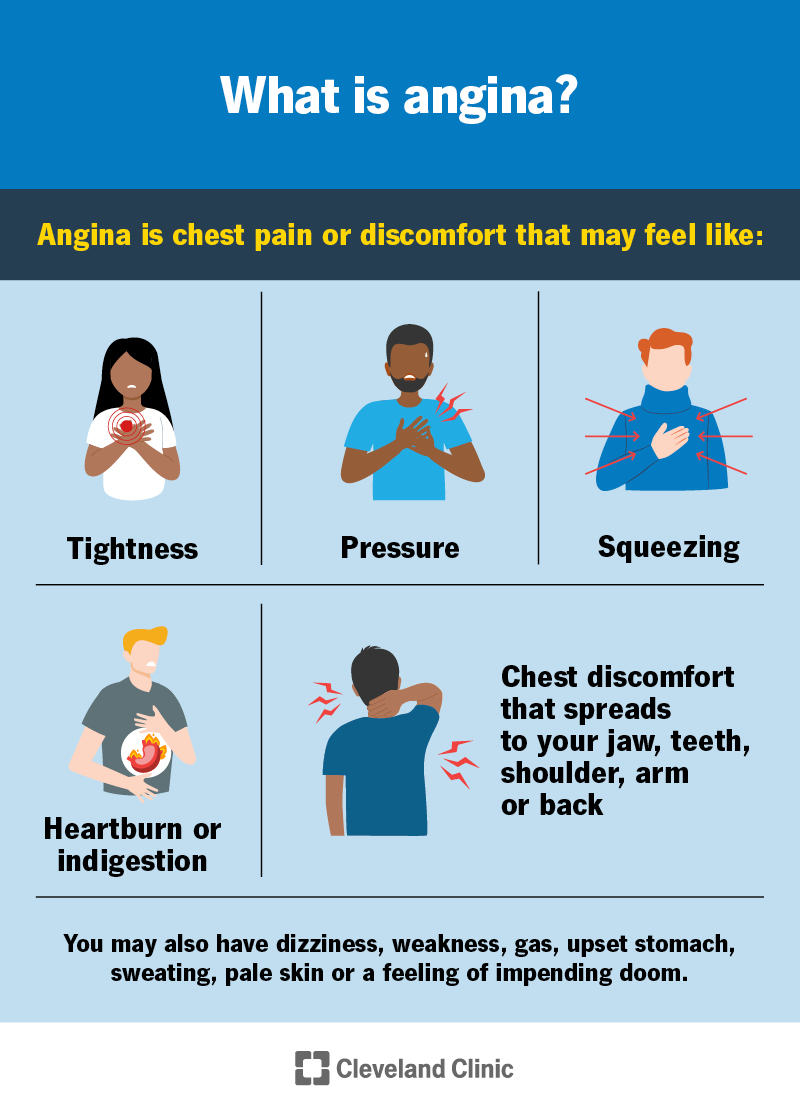
Image content: This image is available to view online.
View image online (https://my.clevelandclinic.org/-/scassets/images/org/health/articles/21489-angina)
Angina (angina pectoris) is pain or discomfort that occurs when your heart isn’t receiving enough blood. The chest pain can range in severity, from a vague ache to crushing pressure. Angina pectoris is a symptom of heart disease — most commonly, plaque buildup or a blockage in your heart’s arteries.
Advertisement
Cleveland Clinic is a non-profit academic medical center. Advertising on our site helps support our mission. We do not endorse non-Cleveland Clinic products or services. Policy
Angina can be a warning sign of a heart attack — sometimes, days or weeks in advance. Call 911 or your local emergency number if you have unexpected, severe or worsening chest pain.
There are four main types of angina pectoris:
The main treatments for angina include medications to stop episodes as they’re happening, plus medications or procedures to address the underlying cause of angina pectoris. You’ll need lifelong follow-up with a cardiologist to check on your heart and adjust your treatment plan as needed.
Advertisement
Most people with angina describe having chest pressure or chest pain. It can be mild or severe. It’s common to have vague discomfort, rather than actual pain. Angina might feel like:
This pain or discomfort from angina pectoris may spread to your jaw, teeth, shoulders, arm or back.
You may also have:
Healthcare providers sometimes use a scale of 1 to 4 to describe the severity of angina symptoms, with 4 being the most severe:
1: You have angina only when you’re pushing yourself with physical activity. Your usual activities don’t cause it.
2: Fast walking or climbing stairs can trigger angina. You may also notice it if you move around after a heavy meal. Cold weather, wind or strong emotions may also cause it.
3: Walking a shorter distance at a normal pace can trigger angina.
4: Any physical activity can trigger it. You may even have it while resting.
Reduced blood flow to your heart causes angina. Your heart may not get enough blood due to:
You’re more likely to develop angina if you:
Medications can stop angina episodes and reduce how often you have them. But your provider will also treat the condition that’s causing angina. This means you may need a combination of medications, procedures and lifestyle changes. The goals of treatment are to improve blood flow to your heart and lower your risk of a heart attack or cardiac arrest.
Your provider may recommend:
Advertisement
If your provider prescribes nitroglycerin, be sure to keep it with you at all times.
You can’t always know what type of angina you’re having in the moment. That’s why it’s crucial to contact a healthcare provider if you have chest pain of any sort. They’ll figure out the cause and distinguish between stable and unstable angina. You may need emergency care right away to prevent or treat a heart attack.
Call 911 or your local emergency number if:
You’ve probably seen enough movies to imagine what chest pain looks like. But angina might not make you clutch your chest or collapse. It may not even feel like pain. It may be subtle or come and go so quickly that you question if it’s a big deal.
But angina is always worth taking seriously. It’s your heart telling you that something isn’t right and to seek medical care. The conditions that cause angina are treatable. The sooner you start treating them, the better.
If you’ve been diagnosed with angina, talk with your provider about what’s “normal” for you and what should prompt you to call emergency services.
Advertisement



Sign up for our Health Essentials emails for expert guidance on nutrition, fitness, sleep, skin care and more.
Learn more about the Health Library and our editorial process.
Cleveland Clinic’s health articles are based on evidence-backed information and review by medical professionals to ensure accuracy, reliability and up-to-date clinical standards.
Cleveland Clinic’s health articles are based on evidence-backed information and review by medical professionals to ensure accuracy, reliability and up-to-date clinical standards.
When your heart needs some help, the cardiology experts at Cleveland Clinic are here for you. We diagnose and treat the full spectrum of cardiovascular diseases.
